





































TL;DR
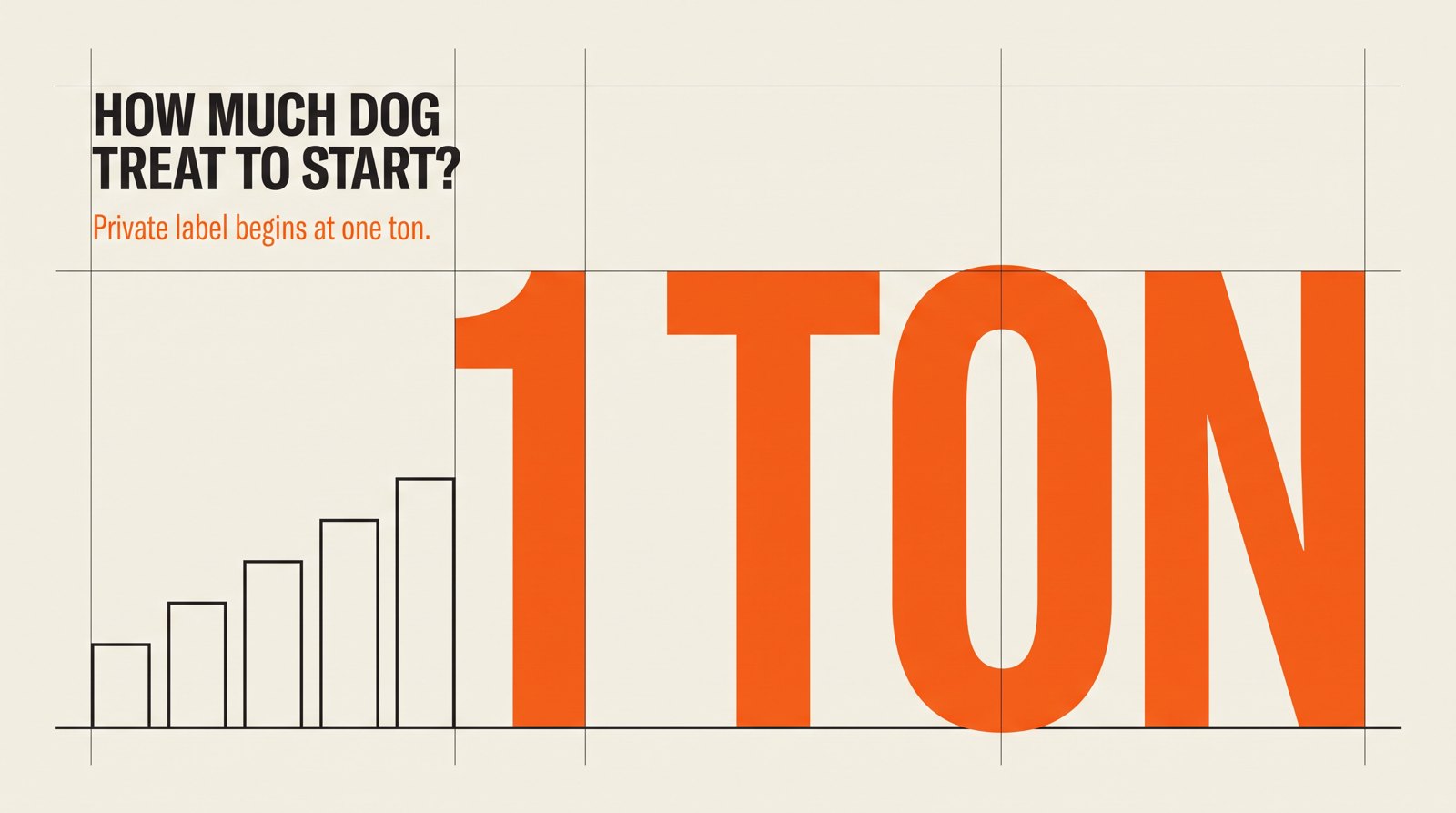
- The stated minimum for a bulk order is 1 ton, which is about 100,000 chews at 10 g each.
- The manufacturer quotes 7 to 10 days by air and 20 to 30 days by sea.
- A US pet food label needs 8 elements, but feeding directions are optional on plain treats.
- Private label can cover custom cuts, slice thickness, textures and packaging.
Short version: the minimum order is the easy part. The label and the import rules are where a first-time brand spends its time.

Private label dog treats are made by one company and sold under another company’s brand, so a first order is really three projects at once: a product, a label and a shipment. The product is usually the simplest of the three.
What private label means in practice
For a dried sweet potato treat, the maker does the cutting, drying and packing, and the brand supplies the name and the artwork. Qualitex Global offers this as OEM and ODM work from its factory in Dong Nai Province, Vietnam, covering private labeling, custom packaging, custom cuts and shapes, slice thickness and texture.
Cut size matters more than it sounds. A chew that suits a Labrador is a worry for a smaller dog, which is the kind of breed detail covered in this site’s care guide for French bulldog owners.
Minimums and shipping times
The manufacturer states a minimum of 1 ton for bulk or wholesale orders and describes its MOQ as flexible for bulk buyers. Here is how the numbers it publishes line up.
| Item | Stated figure | What it means for a first order |
|---|---|---|
| Minimum order | 1 ton | About 100,000 chews at 10 g each |
| Air freight | 7 to 10 days | Fits a sample run or a rush restock |
| Sea freight | 20 to 30 days | Plan stock around a month in transit |
| Packaging | Retail, wholesale or bulk | Decide before artwork is final |
The 100,000 figure is simple arithmetic, not a quote. It shows why most new brands ask for samples first and plan their sales channel before they commit to a ton.
What the label has to say
In the United States, state feed officials review pet food labels, and the standard model comes from AAFCO. Its labeling requirements for start-ups list eight elements: brand and product name, intended species, net quantity, guaranteed analysis, ingredients in order of weight, a nutritional adequacy statement, feeding directions, and the name and address of the manufacturer or distributor.
Treats get some room. Feeding directions are optional for treats that are not complete and balanced and are labeled as snacks or treats. Claims still must not be false or misleading, and that covers advertising as well as the pack.
Import rules differ by market
The manufacturer points buyers to the rules in each destination: USDA and FDA for the United States, the Feed Law in Europe and CFIA guidelines in Canada. It also says factory audits and certifications are available on request. Ask for them in writing before artwork is printed, since a label claim has to match the paperwork behind it.
A short checklist for the first order
- Request samples in two slice thicknesses and compare texture.
- Confirm the pack format and whether your artwork fits it.
- Ask which certificates exist and get copies.
- Check the label against all eight elements for your market.
- Pick air or sea freight based on when the stock has to be on shelf.
Where the time really goes
Drying and packing take a manufacturer days. Label review, certificates and customs take a new brand weeks. Starting those three in parallel with the first sample is what keeps a first order from sitting in a warehouse waiting for paperwork.